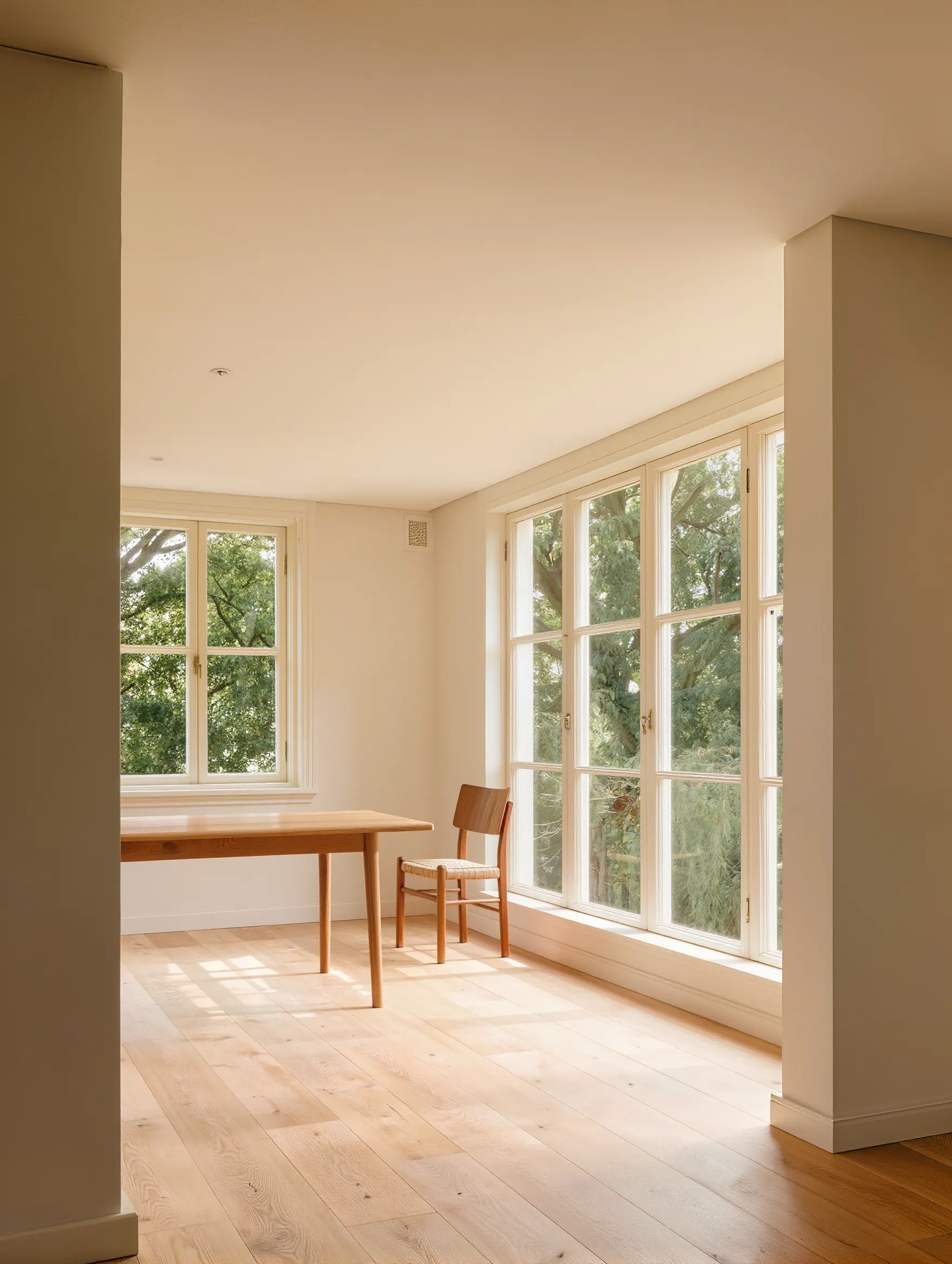
When do you choose spraying over rolling?
Spraying pays off on large surfaces, high ceilings and whole homes, such as new builds. Taping off takes time, but the spraying itself is much faster and the result is more even than with a roller. For a single wall in a lived-in room, rolled emulsion paint (sauswerk) is often more practical.
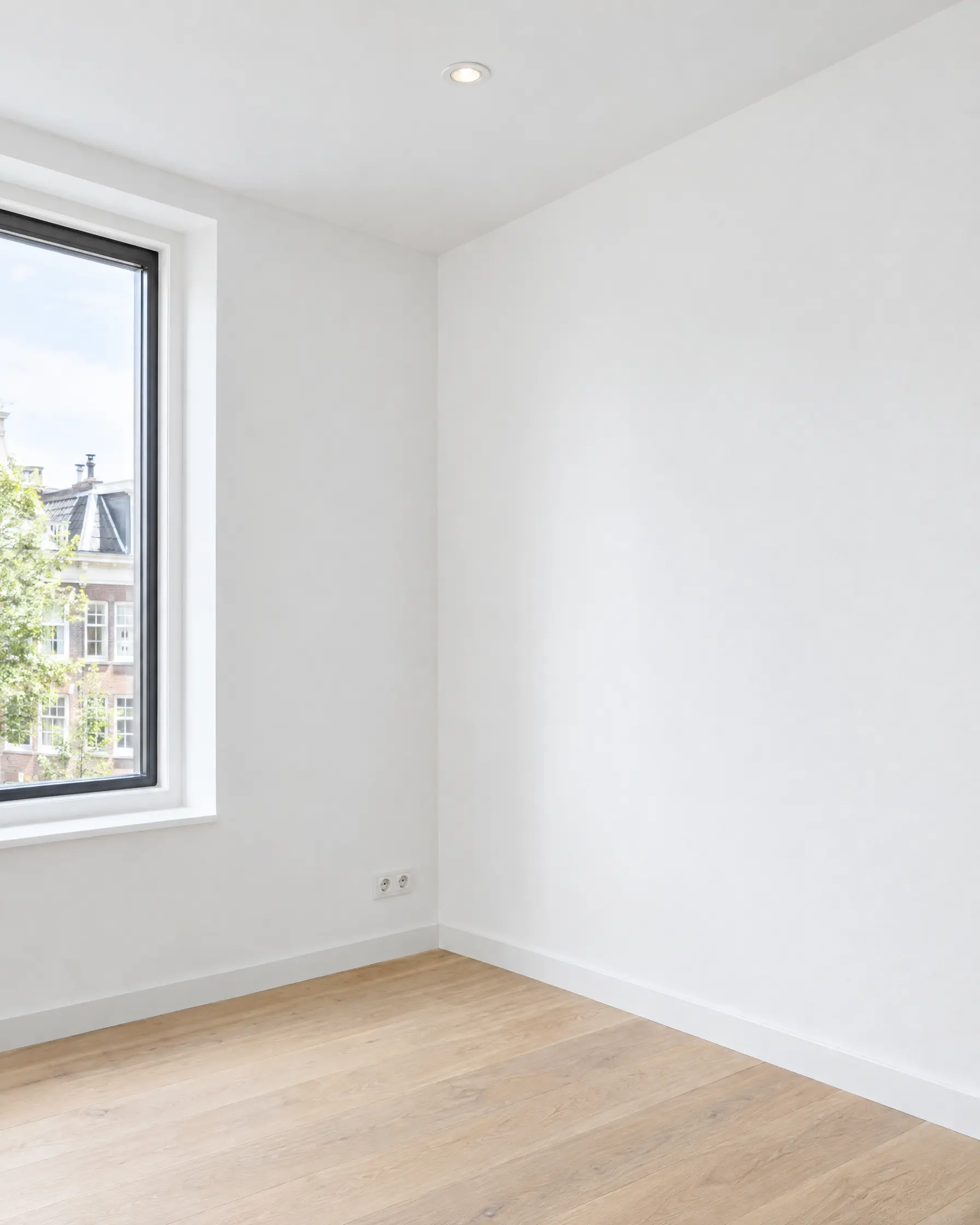
- New builds: the whole home sprayed white before you move in
- Plastered walls and ceilings once dry
- Refreshing ceilings with old spray texture or relief
- Commercial buildings, offices and stairwells
Spraying or rolling: the differencesSpray painting for contractors and projectsWhen your new-build home is ready to spray
Taping off is half the job
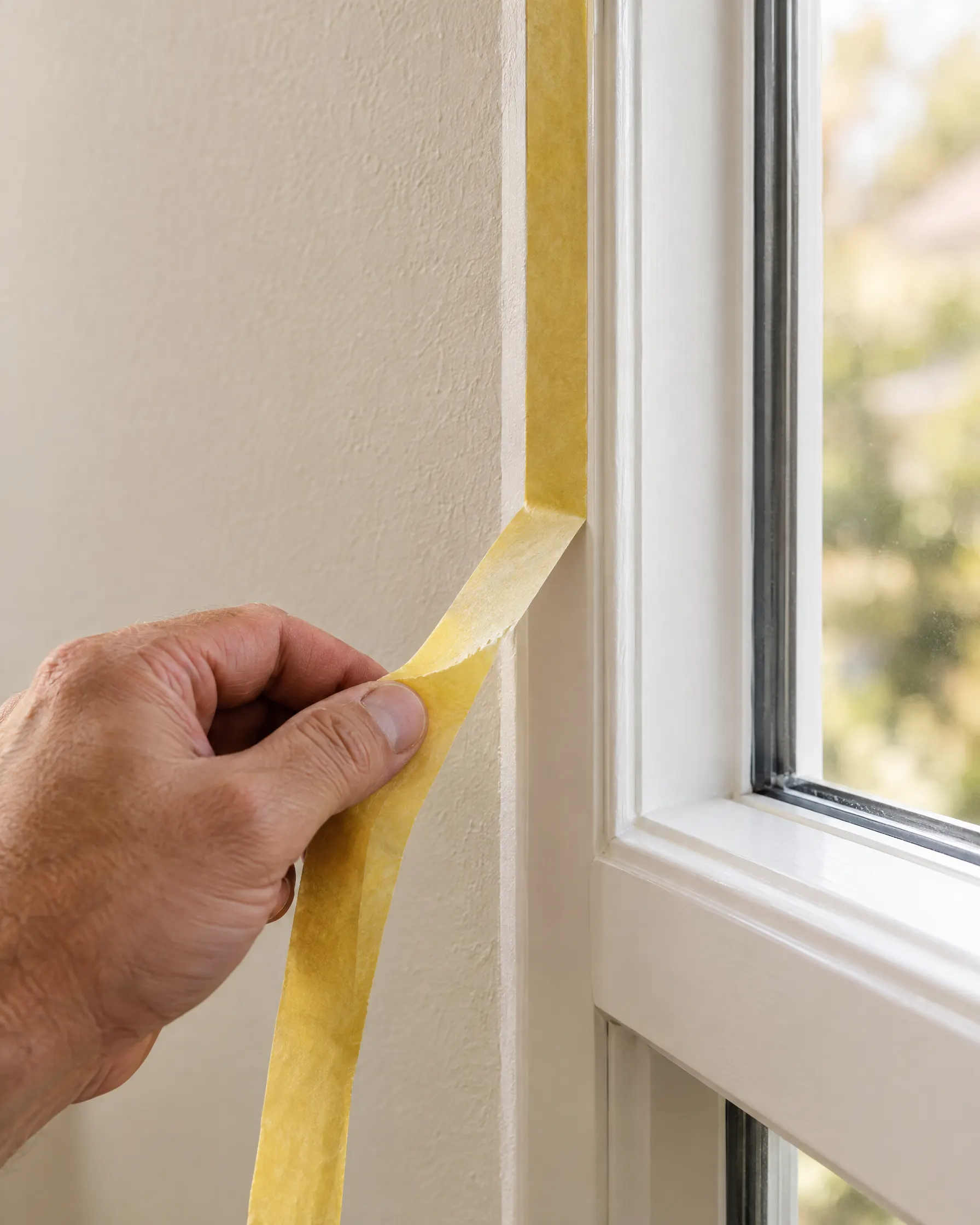
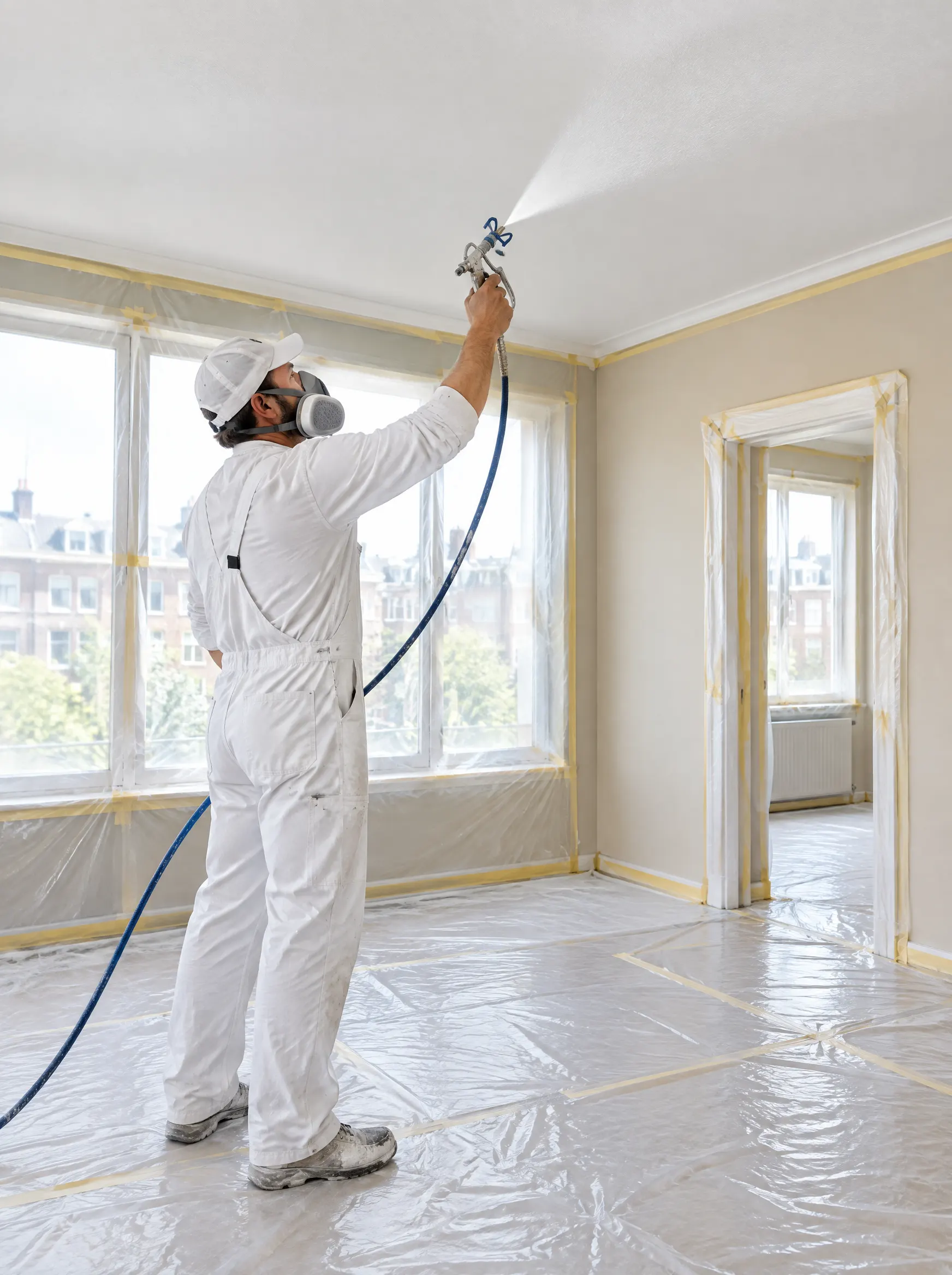
Latex mist goes everywhere. So the work starts by taping off everything that isn't being sprayed: windows with sheeting, frames and skirting boards with tape, floors with heavy-duty floor protection. After spraying, all the sheeting and tape comes off and the room is cleaned up. You get the room back the way it was, just crisp white.

Spraying ceilings and walls: how it works
First the surface is checked: small holes and cracks are filled, and new plaster has to be completely dry. Then everything is taped off, a primer goes on where needed and two coats of latex are sprayed. The ceiling comes first and then the walls, so no mist lands on a finished surface.
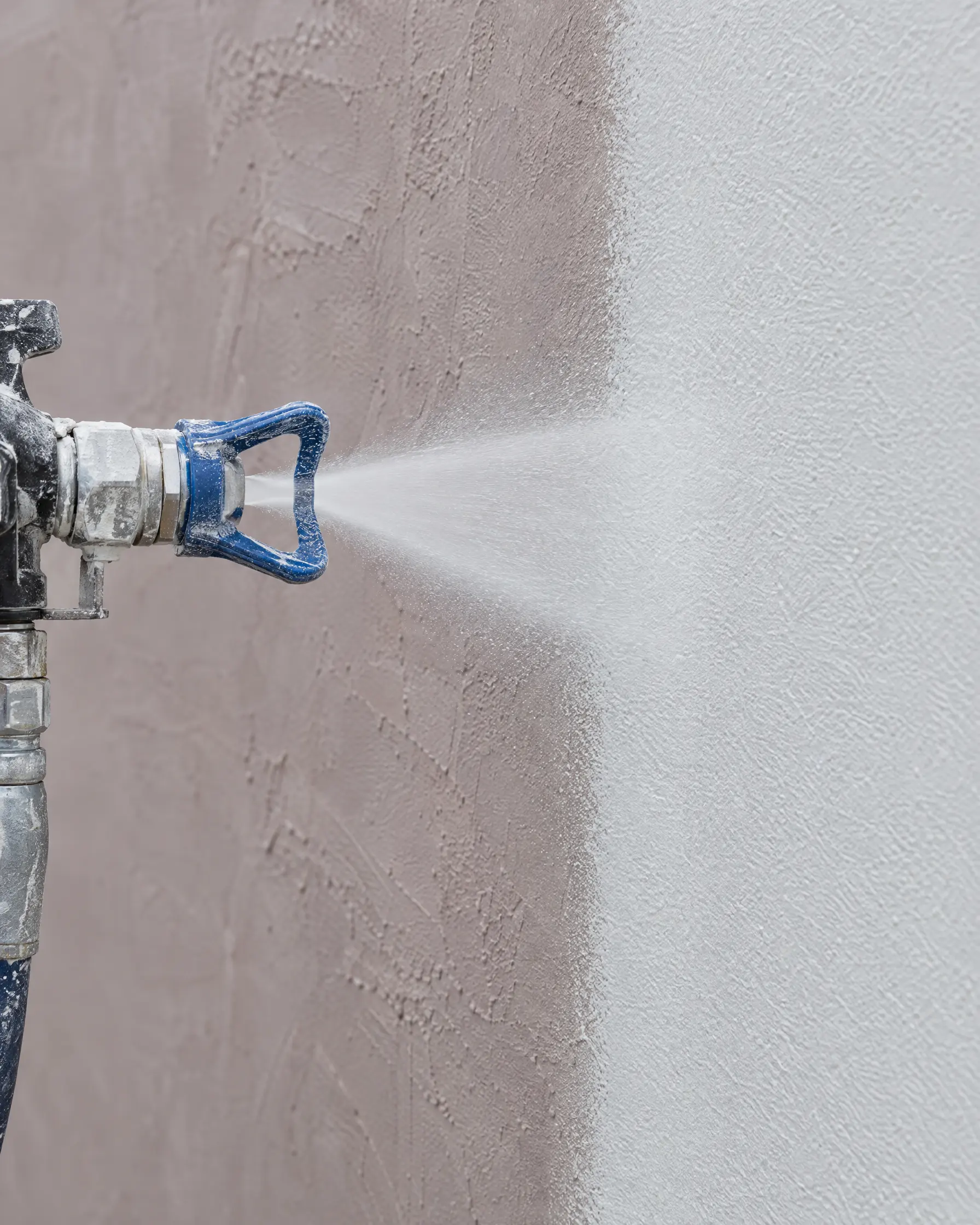
An airless sprayer pushes the latex through a fine nozzle at high pressure, without compressed air. That puts an even coat on the wall without the texture of a roller. Each pass overlaps the previous one slightly, so you see no lap marks.
Prime new plaster first
New or freshly plastered walls soak up latex like a sponge. Without primer the paint dries patchy and can peel later. Wait to spray until the plaster is completely dry; see the guide on drying times.

Downsides of spray painting
Taping off takes time, so for one wall in a lived-in room, rolling is often cheaper. The room has to be empty or fully wrapped. And spraying doesn't make a surface any flatter: a bump or crack is just as visible after spraying as before. That is why the work always starts with the surface.
Matt, satin or colour?
Most walls and ceilings are sprayed in matt white latex; it hides small irregularities best. In a kitchen, hallway or children's room, a more washable latex can be handy. Colour can be sprayed too; that is agreed in the quote.
Can you touch up spray paint later?
Small damage can be dabbed or rolled with the same latex. On a large surface, a touched-up spot may stay visible in raking light. So keep a tin of the same latex.