Skip to content

Based near Amsterdam

Spetterloosplasterers & painters

Plasterer for smooth walls and ceilings, quoted in plain English

Expect smooth plastering to cost €20 to €28 per m², including 9% VAT (btw), priming, covering up and cleaning. No Dutch quote full of terms you have to look up, and no price that jumps by 9% or 21% once VAT is added. Walls and ceilings are skimmed to a paint-ready finish (sausklaar) or wallpaper-ready finish (behangklaar), in existing homes, new builds and commercial buildings across the Netherlands. Before a single bucket of plaster is opened, your floor, window frames and sockets are covered. You can write to us in English.

  • Price on paper up front
  • Covering and cleaning up included
  • A reply within 24 hours

Updated on · Edited by: Samir El Ouariachi, painter and plasterer

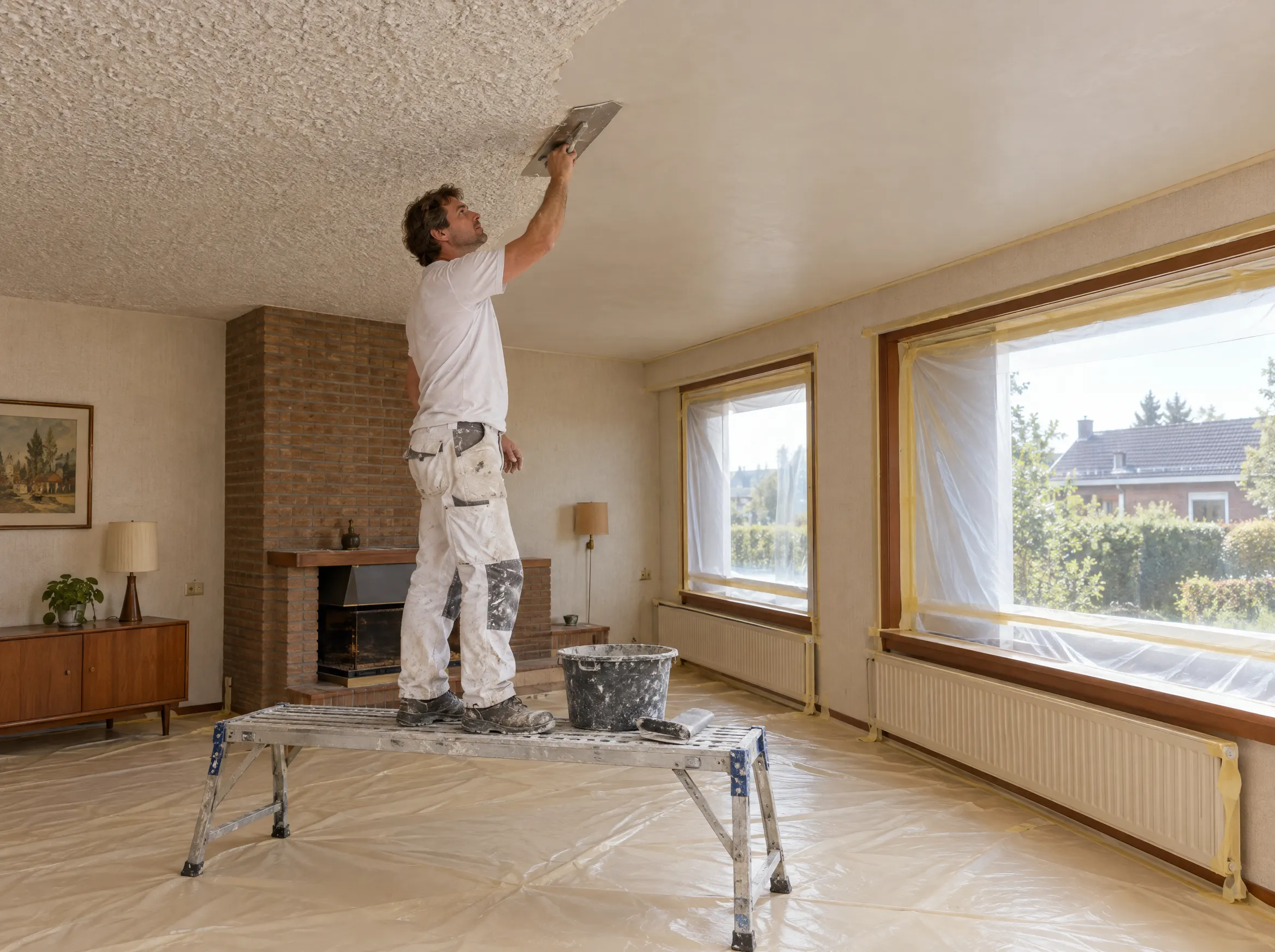
Plasterer on a work platform skimming a textured ceiling smooth, half already done, floor and windows covered

What do paint-ready, wallpaper-ready and smooth plaster mean?

A paint-ready finish (sausklaar) is plastered so smooth and flat that you can put latex or wall paint straight on it. There are no visible joins or trowel marks left. This is what most people mean when they ask for smooth plastering or a smooth skim coat.

Wallpaper-ready (behangklaar) is one step less fine: flat enough to hang wallpaper, but small irregularities will show once you paint it. It is cheaper, but only choose it if you are sure the wall will be papered.

Which quality grade counts as paint-ready

Worked example: plastering a living room

Take a living room of 5 by 4 metres, 2.60 metres high. The walls add up to about 47 m²; take off a window and a door and you are left with roughly 40 m². The ceiling is 20 m². At the guide price of €20 to €28 per m² including VAT, that gives the amounts below. Ceilings are usually at the top of the range, because the work is heavier.

Whatm²Estimate incl. 9% VAT
Living room wallsapprox. 40€800 to €1,120
Living room ceiling20€400 to €560
Totalapprox. 60€1,200 to €1,680
Worked example at the guide price of €20 to €28 per m², on a surface without major repairs. The exact price is in the quote.

More price examples per room

Plastering walls: from rough wall to paint-ready

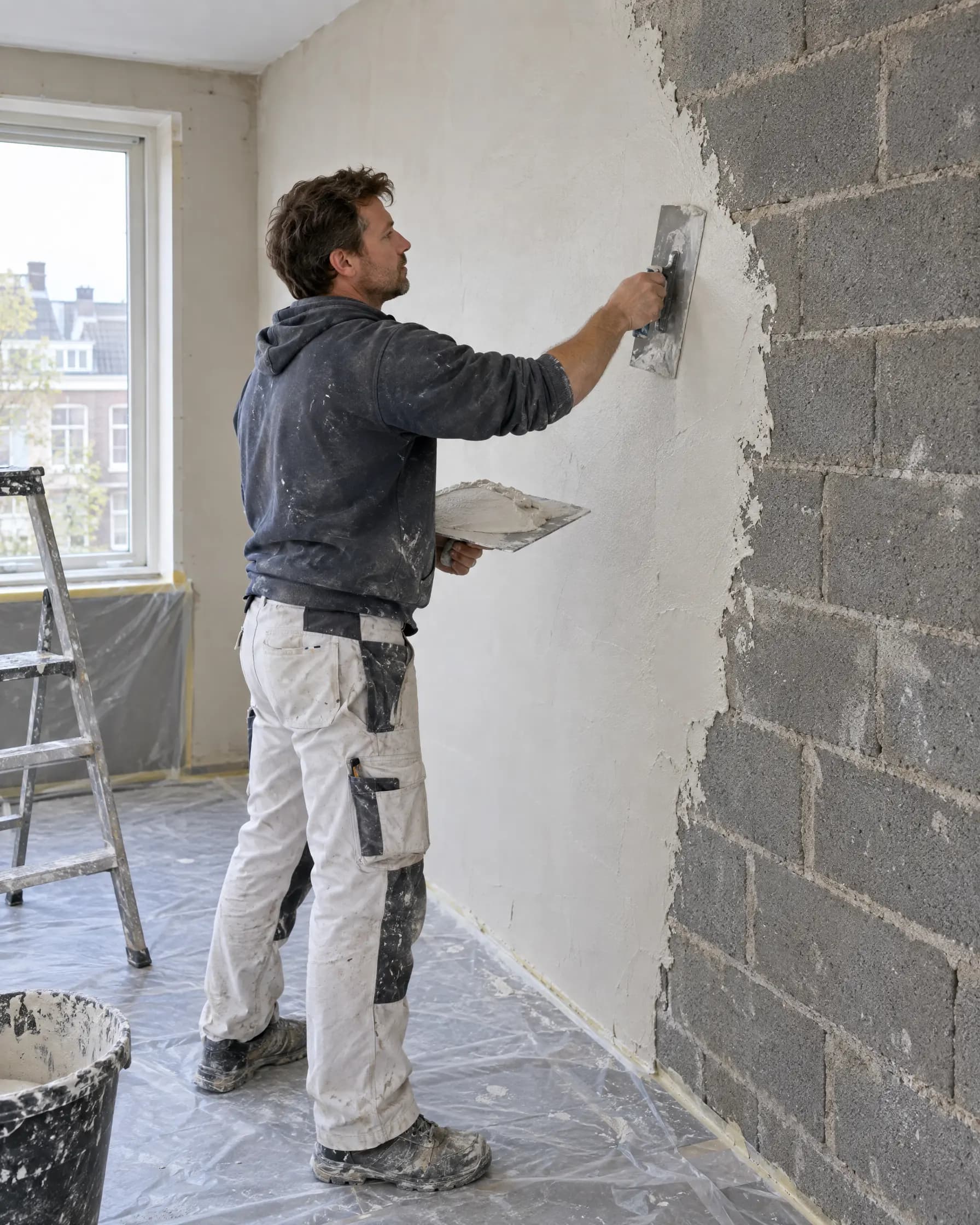
Plastering a wall starts with the surface underneath. Loose bits come off, cracks and holes are filled, and corner beads go on the corners so they stay dead straight and don't get damaged. New walls of gypsum or sand-lime brick get a primer first, so the plaster bonds well and doesn't dry too fast. That priming is included in the guide price per m²; many firms add it as a separate item.

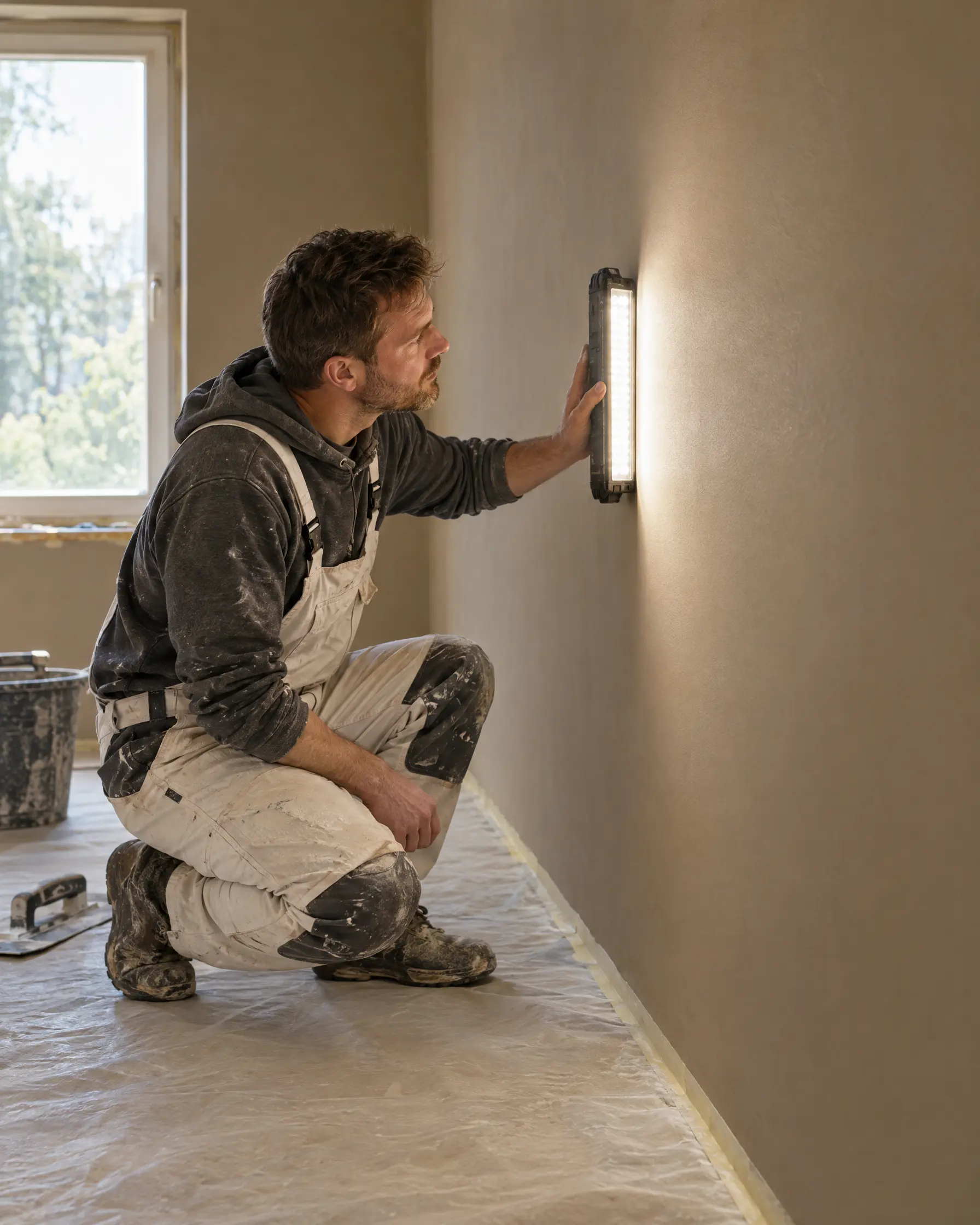
Then the plaster goes on and is worked smooth with the trowel in several passes. You can see the difference a proper plasterer makes in raking light: no streaks, no bumps, no ridges along the skirting boards.
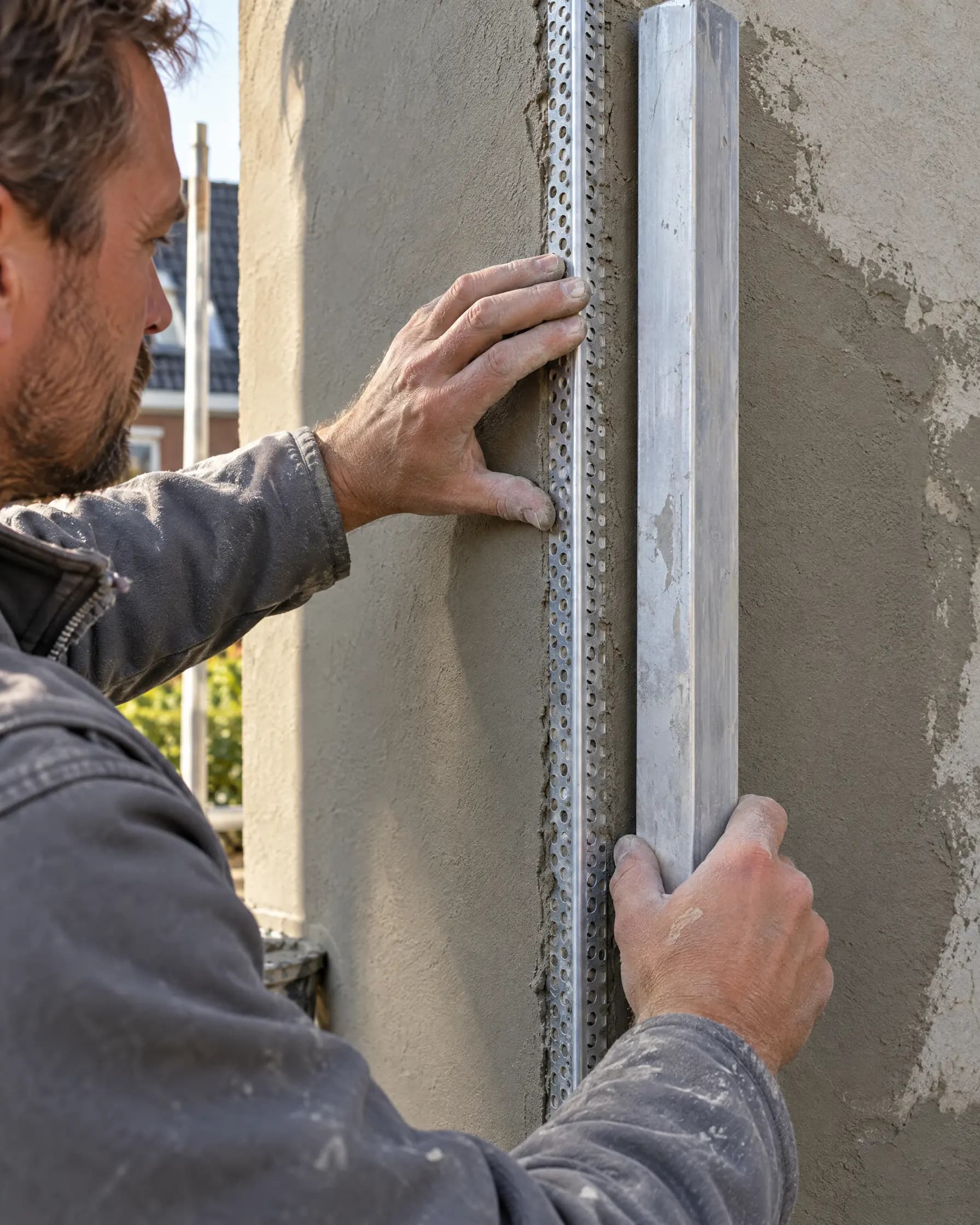
Plasterer pressing a corner bead into fresh plaster and checking the corner with a long straightedge
  • Walls plastered smooth, paint-ready or wallpaper-ready
  • Renovation: repairing old layers, cracks and holes
  • Plastering over tiles or textured render (spachtelputz), after checking adhesion
  • New builds: a whole house or flat in one schedule

What layers of plaster are there?

Bare brickwork or a wall full of cable chases first gets a base coat (raapwerk): a thicker layer that straightens the wall. Then comes the plaster that is finished smooth. On a wall that is already fairly flat, such as gypsum blocks or sand-lime brick, a thin coat is often enough. Which build-up your wall needs can be seen during the survey or from your photos.

The difference between good and mediocre plastering is mostly in the final smoothing. When the plaster starts to set, the plasterer goes over it once or twice more with the trowel, each time with less pressure and a wet trowel. Too early leaves streaks, too late leaves a rough skin. Knowing that moment is the craft.

Plaster or spray a ceiling?

Having a ceiling plastered gives a flat, smooth result that you then finish with latex paint. Spraying a textured finish (spackspuiten) is cheaper and quicker, but it leaves a grainy texture and doesn't make the ceiling any flatter. Plastering a ceiling is heavier work than a wall, which is why the price per m² is usually at the top of the range.

If you have a textured ceiling (spackplafond) now and want it smooth, it can usually be plastered over. For a ceiling in a house built before 1994, have it checked for asbestos first, before anything is sanded or scraped.
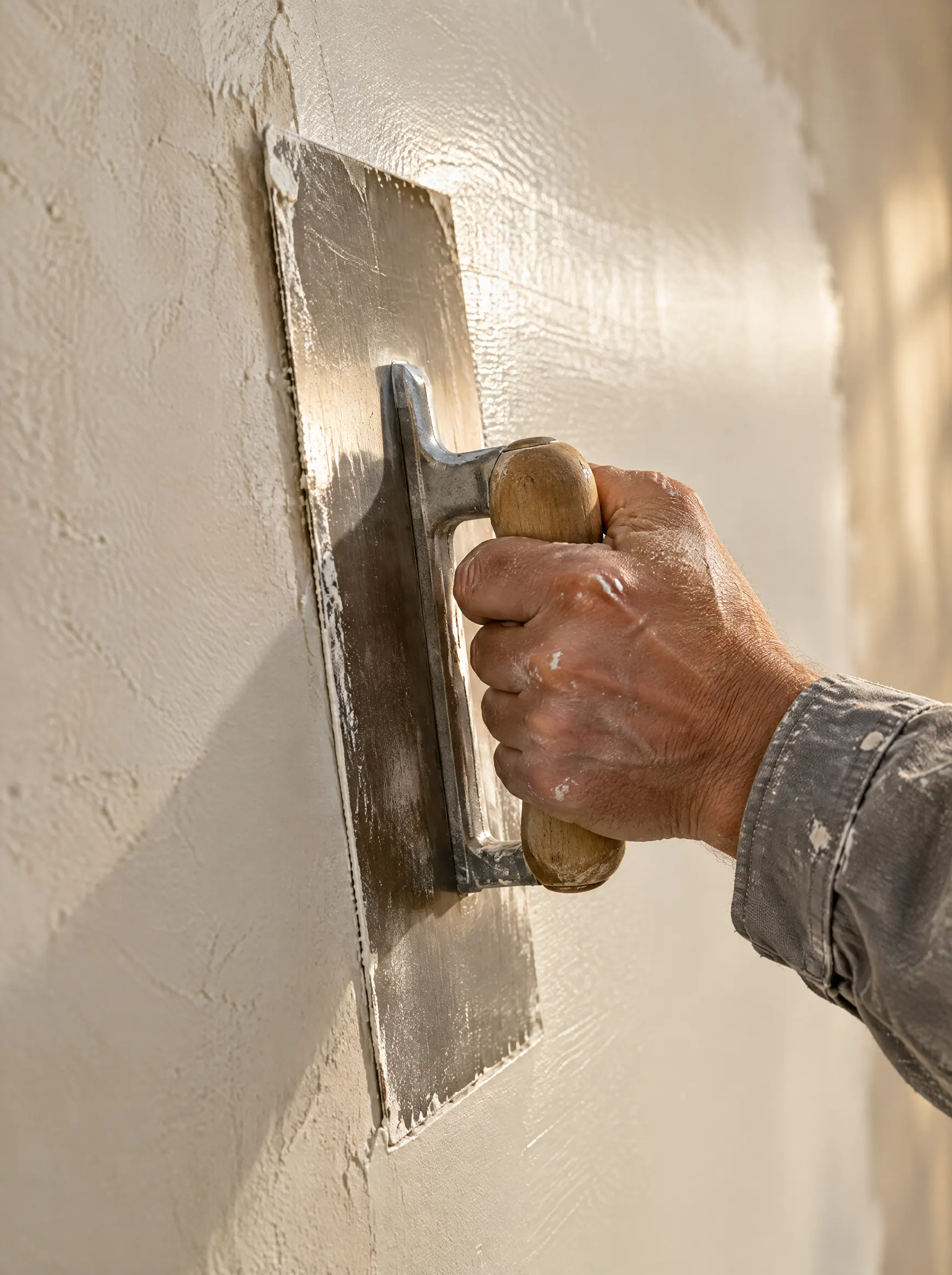
Hand with a stainless steel trowel smoothing fresh plaster

Plaster over a textured ceiling or remove itRuling out asbestos in a ceiling from before 1994

What is included in the price per m²?

The guide price of €20 to €28 per m² covers the plastering itself, the materials, 9% VAT (for a home older than 2 years), covering your floor and window frames, and cleaning up afterwards. A good quote lists everything else that will be done, item by item, so there are no surprises later. Major repairs, such as loose old plaster or removing a thick textured layer, are agreed separately in advance.

How your home should be left

This is why Spetterloos exists. Too often there were windows full of plaster splashes, floors with white smears and skirting boards nobody had thought about. That is why floors should be covered with protective runner, frames and glass taped off and sockets shielded before work begins.

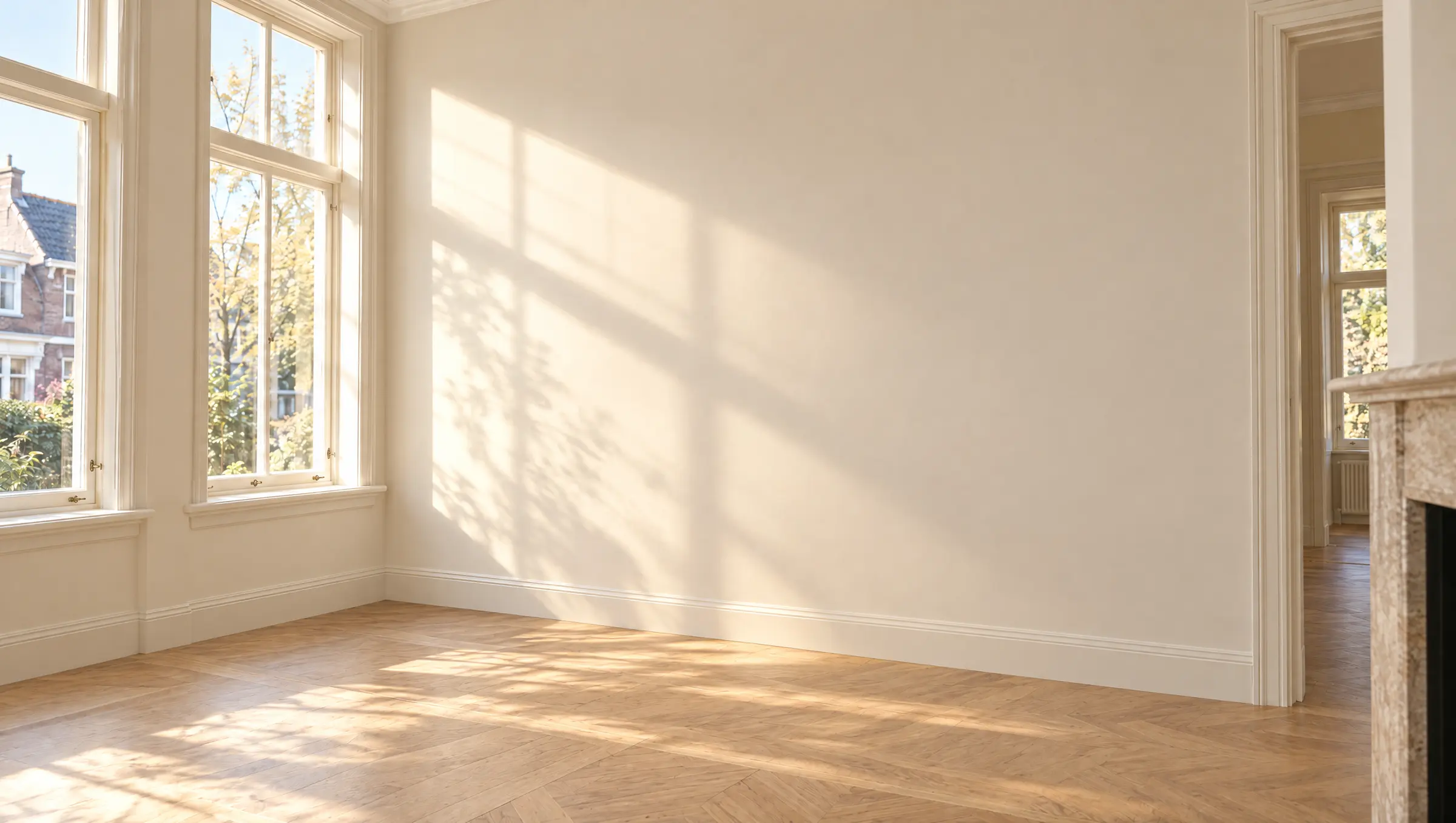
At the end you walk through the room with the plasterer. The job is only done when you are happy with the work and with the state of your home.

Tradesman folding up the floor protection after the job, the room is clean

Why Spetterloos works this wayNeed it fast for a handover?What to sort out yourself beforehand

How long does plaster take to dry?

As a rule of thumb, gypsum plaster dries about 1 millimetre per day, with good ventilation and normal room temperature. So a wall with a 10 mm coat is dry enough to paint after about a week and a half. Thicker coats, cold or a closed-up room make it take longer. Dry plaster is an even light colour; dark patches are still wet.

All about plaster drying timePlastering and painting in one schedule

Does new plaster crack?

Hairline cracks in the first months are often caused by shrinkage and settling of a new home or a new wall, not by the plaster itself. That is why joints and transitions between different materials are treated before plastering, and the plaster has to dry properly before any paint goes on. If a crack keeps coming back, the cause is usually in the surface underneath.
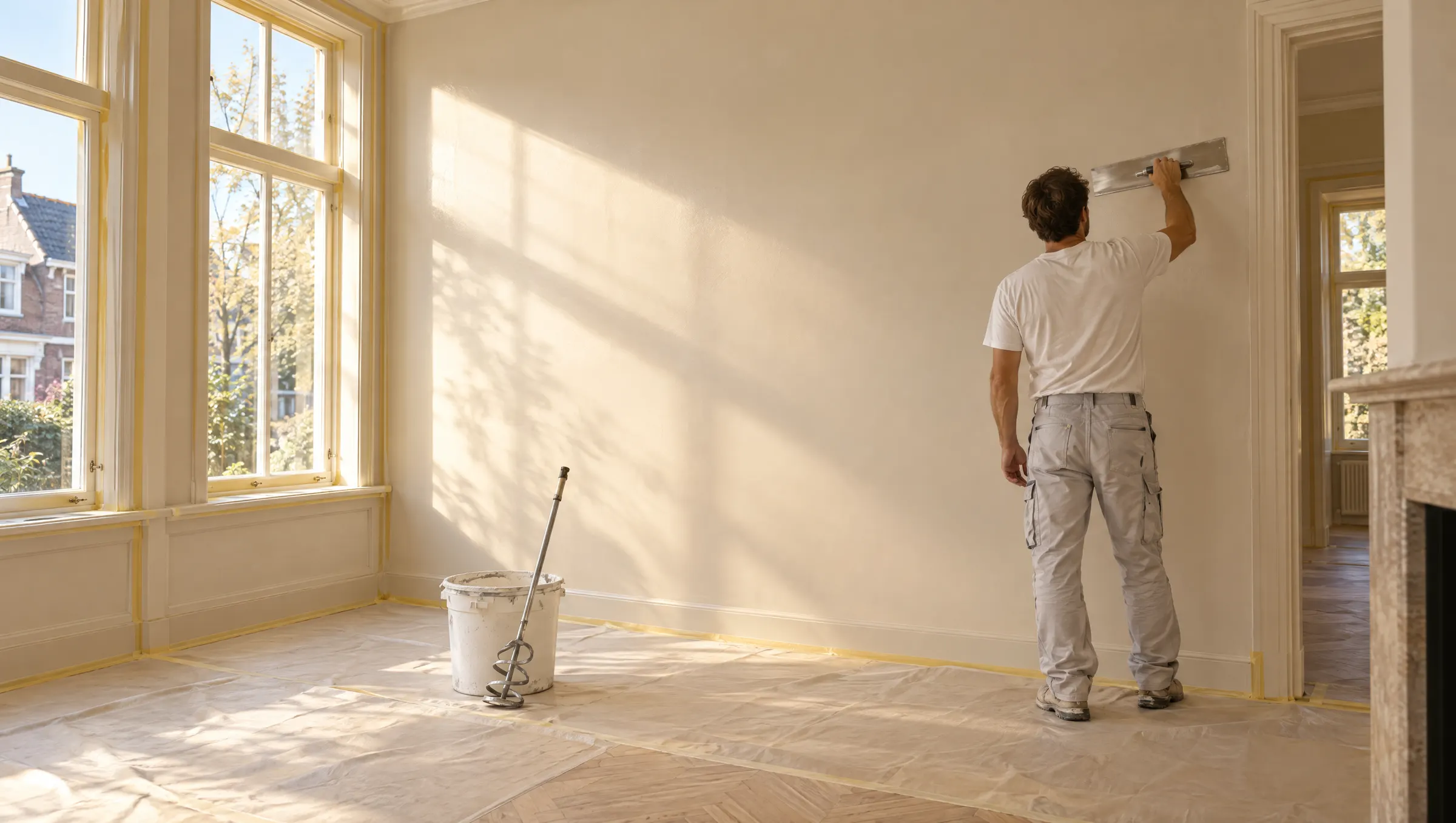
How plastering works

  1. 01

    Survey

    The surface is checked, the m² per room measured and everything put into the price on paper. Remotely, photos and measurements are often enough.

  2. 02

    Covering up

    Floor under protective runner, frames and glass taped off, sockets and radiators shielded. All before a bucket is opened.

  3. 03

    Preparing the surface

    Loose bits off, cracks and holes filled, corner beads on and the wall primed so the plaster bonds well.

  4. 04

    Plastering

    The plaster goes on in the thickness the wall needs. On a crooked wall, a base coat first, then the finishing coat.

  5. 05

    Smoothing

    As the plaster sets, it is trowelled smooth. Then raking light shows whether there are any streaks or ridges.

  6. 06

    Clean handover

    Sheeting and tape out, vacuuming, windows checked. You walk through the room with the plasterer, and only then is the job done.

Good to know

Why a ceiling costs more
Working overhead is heavier and slower, and the plaster wants to come down. That is why a ceiling is usually at the top of the price range.
Dry first, then paint
As a rule of thumb, gypsum plaster dries about 1 mm per day with good ventilation. Paint too early and you trap the moisture, and the paint starts to peel.
Paint-ready is an agreement
Paint-ready and wallpaper-ready are defined quality grades in the trade. A good quote states which finish you get, so you know what to expect.
Hairline cracks aren't always the plaster
In a new home or with new walls, shrinkage cracks can appear in the first months as the building settles. That is why joints between different materials are treated beforehand.

What to expect from a good plasterer

  • The price on paper up front, with the m² per room
  • Priming and corner beads named in the quote, not added later
  • Floor, frames and sockets covered before anything is opened
  • A flat result you can check with raking light
  • No plaster splashes on glass, skirting boards or floor
  • A schedule with the drying time built in

How much does it cost to plaster walls or a ceiling?

WorkGuide priceMarket, for comparisonSource
Smooth plastering, walls (paint-ready)€20 to €28per m², including 9% VAT€17 to €31per m²Trustoo (23-10-2026)Stukadoorsclub (2026)
Smooth plastering, ceiling€20 to €28per m², including 9% VATceilings are usually at the top of the range€17 to €25per m²Homedeal (13-02-2026)
Priming the surfaceIncludedincluded in the plastering price€4 to €7per m²Homedeal (13-02-2026)
Spetterloos guide price including 9% VAT (homes older than 2 years), with priming, covering and cleaning up included; spray painting and rolled paint in 2 coats. Minimum €300 per job under 30 m². Where you land within the range depends on the surface and the amount, and is set in the quote. Market prices as published by the sources listed, checked on 30 September 2026.

All prices per m², with sources and VAT

Frequently asked questions about plastering

How much does it cost to plaster walls or a ceiling?

Expect smooth, paint-ready plastering to cost €20 to €28 per m², including 9% VAT, priming, covering up and cleaning. Ceilings are usually at the top of the range, because the work is heavier. Below 30 m² a minimum of €300 per job applies. The exact price depends on the surface, the number of m² and what needs repairing first, and is set in the quote.

Which VAT rate applies to plastering?

For plastering work on homes older than 2 years, 9% VAT (btw) applies, including on materials. For new builds and commercial buildings it is 21%. According to the Dutch Tax Administration (Belastingdienst), installing plasterboard partition walls is always 21%.

Is plastering for wallpaper or for paint cheaper?

Wallpaper-ready plastering is cheaper than paint-ready, because wallpaper hides small irregularities. If you want to paint later, go for paint-ready straight away; otherwise you pay twice.

Can you plaster over tiles or textured render?

Often, yes. Tiles that are firmly attached first get a bonding coat, then they can be plastered. With textured render (spachtelputz or spack) it depends on the thickness and the adhesion; sometimes plastering over it is cheaper, sometimes the layer has to come off. That is decided during the survey.

Does the furniture need to leave the room?

Ideally yes, or it goes in the middle of the room under plastic sheeting. Whatever you can't move gets covered. Floors, window frames, radiators and sockets are always protected.

How many m² does a plasterer do per day?

According to Stukadoorsclub, it is around 40 to 60 m² per day for traditional plastering and 60 to 80 m² for thin-coat plaster. Lots of corners, frames and repairs bring that down. With the quote you get a schedule in days.

Can I plaster my walls myself?

Repairing a small patch is doable. Getting a whole wall or ceiling paint-ready is skilled work: you only see the difference when raking light falls on it, and by then it is too late.

Tell us in a minute what needs doing. You see an estimate straight away, and the quote comes on paper up front, with covering and cleaning up included.